Matthew Shipp & Mat Walerian Duo: The Uppercut Live at Okuden | Nov 20th, 2015
Music: 4 stars (out of 5)
Sonics: 4 stars (out of 5)
As Matthew Shipp’s catalog expands, so does our understanding of the depth and breadth of his genius. In more than 25 years of recording, the avant-garde pianist has explored as many settings as any player in jazz. His duo dates—with William Parker, Joe Morris, Michael Bisio, Rob Brown, Mat Maneri, Roscoe Mitchell, Sabir Mateen, Darius Jones, Evan Parker, and here, Polish reed player Walerian—are especially revealing. In this conversational format, Shipp’s attentiveness to his partner’s moves becomes more anticipatory than reactive, and Walerian’s alto sax, bass clarinet, soprano clarinet, and flute push Shipp in many directions, while adding an extraordinary range of colors and textures around the bright edginess and rich chords of the acoustic piano. There are lots of blues and bop intonations and songlike melodies to make these original boundary- bashing pieces accessible to mainstream listeners. But Shipp, 54, and his de facto protégé Walerian, 31, throw in plenty of fractured harmonies, skittering rhythms, guttural honks, and high-register squeals as the moment moves them. Other than the applause preceding the encore, you might forget that this is a concert date, though the roomy sound of the piano and the palpably spontaneous creative energy feel totally live.--Derk Richardson
So has pianist Matthew Shipp finally clambered aboard the repertory album bandwagon? Certainly on To Duke he addresses seven standards derived from the Ellington Orchestra, alongside four originals. But if you cast an eye over Shipp's discography you'll find such pieces are nothing new. Actually popular songs constitute an enduring part of his repertoire. What's unusual here is the focus on several from the same songbook on the same set. But there's no question of special treatment. In terms of development they often sound little different from other trio inventions. Typically Shipp uses the written material to establish a mood and act as reference points amid the flurries of tangential interplay.
Shipp's accomplices possess the prowess to follow him wherever he goes, though they also have the freedom to choose not to follow him at all. Bassist Michael Bisio offers oblique commentary on the leader's distinctive stylings, whether through plaintive upper register pizzicato or buzzing bow work. On drums, Whit Dickey provides the bedrock of multi directional meter which both creates tension and allows and encourages the pianist's digressions. Shipp's renditions of familiar strains engender a lighter than usual feeling from his patented blend of insistent motifs, sparkling runs and hammered single keys, largely eschewing the customary crashing depth charges.
Shipp's approach recalls a refurbishment of a classic building where the facade remains largely intact but hides an ultra modern complex behind. While Shipp opens the program alone with stirring chords and a rolling cadence on "Prelude to Duke," "In a Sentimental Mood" ably illustrates the trio's modus operandi. Although Shipp revels in the theme, the rhythm team might be pursuing unrelated charts. Dickey lays down a lattice of polyrhythmic layers, while Bisio's counterpoint mediates between the two. But it all makes sense when Shipp leaves the tune for a minimalist chiming sequence nonetheless in the same register and tempo. Then when Bisio and Dickey do eventually lock into the same beat they conjure a glorious surging quality, which ends the track on a high.
"Satin Doll" begins with a playful call and response between piano and bass. In their hands, time expands and contracts, until Shipp spins off in a string of dizzily mutating figures. While threeway interaction prevails as the prime directive of the day, Bisio tackles "I Got It Bad and That Ain't Good" solo, moving from sighing slurs via world weary melancholy to a veritable blizzard of notes, which acts as a suitably engaging foretaste of the rapid clip of the ensuing "Take the A Train." At times the bassist sounds as if he is hanging on for dear life in a welter of dashing piano lines and pulsing drums, before a thunderous climatic derailment. Later on "Dickey Duke" the drummer stars in a series of unaccompanied breaks for his throbbing perpetual motion tattoo.
By the close, it is clear that though nominally an exploration of Ellington, the recital is in fact essential Shipp.
East Axis - No Subject (Mack Avenue Recordings, 2023)
East Axis is an excellent progressive jazz quartet consisting of four well respected musicians, Gerald Cleaver on drums, Kevin Ray bass, Matthew Shipp on piano and new member Scott Robinson on tenor saxophone, alto clarinet, tarogato, trumpet and slide cornet. This album builds on the success their previous fine LP, Cool With That. The music is very impressive and dynamic, with Matthew Shipp moving from dropping huge clusters of battlefield clearing low end notes and chords to hypnotic minimalism of repetitive static that creates a springboard for the others to jump into improvisation from. Robinson is a fine addition to the group with his multitude of instruments allowing the band to develop music that has a multitude of textures and consistencies from fine grain pointillism to deeply hewn free jazz. Cleaver plays particularly well here, using his full command of the entire drum kit to push and pull the tempo while Shipp and Ray gradually guide the rhythm and Ray moves majestically through his horns. This is all happening in real time as the musicians interact with each other and their environment in a very fulfilling way. These four musicians were able to take notions from free jazz and more literally composed sections to coalesce and create truly intuitive music, which makes a memorable impact. This was a very well executed recording, creating exciting music that sounds fresh, the music moving forward by developing a team based and resonant sound played with a spark of the unexpected.
Matthew Shipp’s music cycles like the seasons, and death and rebirth are part of the program. Piano Song is his final album for Thirsty Ear, a label he co-curates, and the second with the current lineup of Shipp on piano, Michael Bisio on bass and Newman Taylor Baker on drums. Baker’s devotion to fundamental rhythms transforms the group from the bottom up, inducing Shipp’s stark themes to swing more traditionally than they have in the past and shining light into the moss-on-bark closeness of Bisio and Shipp’s musical connection. But he’s also right there when the trio breaks things down, so that the transition between crashing chords and a throttled-back groove on “Flying Carpet” not only makes sense, it feels as inevitable and natural as the first green shoots poking out of the melting snow. If you want to hear Shipp getting everything just right, go first to his 2011 release The Art Of The Improviser. But if you want to hear him reconciling the roots of his music with a future he hasn’t found yet, this is the next fearless step into the future.
Ever since bursting onto the New York scene from the New England Conservatory of Music in 1984, pianist Matthew Shipp has reigned supreme as one of the most individual and iconoclastic improvisers of his generation. Grounded in, but not limited to, the avant-garde, Shipp has recorded more than 50 recordings that have defined and redefined the stylistic parameters of that idiom. While doing so, he has become equally known for his caustic outbursts against what he feels is an aesthetically rigid jazz establishment.
I grew up with Shipp in Wilmington, Delaware, and, like him, spent much of my youth listening to the Jackson 5 and studying classical music in high school, so I know there is more to Shipp than the L’Enfant Terrible persona that often overshadows his music.
I sat down with Shipp for an interview in his father’s quiet home in suburban Wilmington. What emerged was an informative history of his evolution as an artist, and an explanation as to why he stopped recording after the release of his new album, Piano Song (Thirsty Ear), arguably his most integrative and ingenious work to date. How did growing in Wilmington influence you as a musician?
Wilmington has its own extremely rich history, and is geographically close to Philly. There’s a continuum within the whole East Coast, from Boston to New York, Philly, and some parts of the South, with many tributaries. And I have taken from all of them to constitute my own unique synthesis.
What got you hooked on jazz?
There were two PBS specials featuring Ahmad Jamal and Nina Simone. They both flipped me out [laughs]. Ahmad Jamal was playing this spare blues, but his language was so cool, just the confidence he had. I didn’t know somebody could get to that. With Nina Simone, her language was so deep. It scared me [laughs]. I was playing classical music, and I was interested in improvisation. She had a classical background, but there was something about how she related the piano to a very black idiom. I really like artists who are in their own genre. Like Stevie Wonder or Ray Charles. That’s what I’ve been trying to do since I was 12 years old. You studied with Robert “Boysie” Lowery, a Wilmington educator who taught generations of local musicians, from Clifford Brown and Ernie Watts, with his methodology called The Lessons.
The Lessons were a very thought-out way of going through chord changes: a way to get you to think very slowly, and structure your solo, where you’re not just blowing through chord changes.
Another mentor was a janitor and a computer expert named Sunyata, who used to live in Newark, [Delaware]. He was a mathematical philosopher. He saw that I had possibilities in what he called the Iconoclastic Mystery School. He encouraged me to follow my own music.
Where you listening to the avant-garde during this period?
I was into Coltrane, Andrew Hill and Sun Ra. And a lot of my introduction to the music was through WRTI-FM at Temple University in Philly. I remember hearing “Salt Peanuts” with Dizzy and Bird. And that was more out to me than Coltrane. I never thought that about A Love Supreme. I also heard Malachi Favors, Sunny Murray … . WRTI really changed my life around.
You also read J.C. Thomas’ Chasing the Trane.
I read it around [when I was] 13 or 14 years old, cover to cover, 20 or 30 times. Trane’s cosmic quest comes through in the book. And Trane’s teacher, Dennis Sandole, is talked about in the book.
Sandole was a Philadelphia-based guitarist who taught advanced theory and composition. You met him through a mutual friend. What did you learn from him?
What I learned from Dennis was the mind’s capacity of constructing a language: A group of chord changes, or anything that improvisers decide to extrapolate on, is an infinite platform. And it’s up to you to work on your materials over and over again until [your music] creates its own language.
Did you better understand Trane’s music because of your studies with Sandole?
I think I understood Trane’s methodology more. I think I had an intuitive understanding of what he was aiming for, from the first time I ever saw the cover of A Love Supreme in Wilmington Dry Goods as a 12- or 13-year-old [laughs].
You moved to New York City in 1984, from Boston, where you studied at the New England Conservatory. Who were your pianistic influences then?
In the ’70s, Keith Jarrett and Cecil Taylor were doing solo concerts. That whole idea of solo-piano-as-extemporary-composition was really in the air because of those two practitioners. So if I’m going to go that way, how am I going to do it? I don’t want to be Cecil Taylor … and I definitely don’t want to be Keith Jarrett, because I don’t like him. But that kind of structural element of how to present yourself as a musical personality was really geared in my head.
But because you are black and playing piano in a dissonant way, everybody compared you to Cecil.
Back in the day, if you played anything with dissonance that was the easy way out. And I invited the comparison more, because when I joined the David S. Ware Quartet, I was the pianist in a band of all Cecil Taylor alumni [laughs]. Now, I was very militant … and I got across the idea that I had my own thing.
In the ’90s and the early part of the 21st century, you started calling out a host of critics, musicians and jazz institutions. Why?
I felt that at that I was being ignored. I targeted two things in that period. The first thing was Jazz at Lincoln Center. In the ’90s, certain people in that organization were outspoken in their close-minded views on certain things … I felt I had to be a counter-balancing voice. But it’s funny: Nowadays, I actually have a really great relationship with Jazz at Lincoln Center.
How did that happen?
I got to know those people over the years. They came down to the Knitting Factory. I thought there was a gospel way to be up there: You had to follow the program, or else “goodbye.” But pretty much everybody I met was pretty knowledgeable about the whole spectrum of the music. So I performed at Dizzy’s Club Coca-Cola, and I did some educational [talks] there.
What was your other major criticism?
The pantheon of pianists who played with Miles Davis: Chick Corea, Herbie Hancock and Keith Jarrett. They occupied such a central place in the whole pianistic zeitgeist from the ’70s—especially in schools.
Now, to be honest, my actual criticism was more about the jazz business, than with them. I do listen to Herbie Hancock, because he embodied a certain type of blackness in the ’70s that was cool. But that doesn’t stop me from being critical of a certain cynicism I felt in everything he’s done since ”Rockit.”
I already talked about Keith Jarrett as a spontaneous improviser, not his language, actually did play a part in my development. But language-wise, I came out of Bud Powell, Monk and Ellington without going through them in the ’70s.
Also, there was actually a degree of calculation involved [in my outbursts]. I believed the things I said. But while I knew I would turn some people off, I also knew that a whole lot of people would admire the balls I had to say those things.
You recorded for musician/actor Henry Rollins’ 2.13.61 Records, and with the Hat Art label. But since 1999, your longest association has been with Peter Gordon’s Thirsty Ear imprint, where you’ve recorded a slew of recordings: from solo and strings to electronica and hip-hop, including Harmony And Abyss, The Art Of The Improviser, and The Conduct Of Jazz. You also served as curator/producer for the label’s Blues Series.
Peter Gordon knows a lot about jazz. For me, it really helps knowing that somebody actually believes in your vision. Even if they know it’s going to take a awhile for the public to catch up with you.
Your new release for that label is Piano Song, a 12-track opus with your latest trio with bassist Michael Bisio and drummer Newman Baker Taylor.
Michael Bisio and I have been playing for six or seven years. The drummer, Newman Taylor Baker, just came into the trio a couple of years ago. He’s played with Ahmad Jamal, Billy Harper and McCoy Tyner. He’s right in the middle of the language. And the funny thing is, he lived in Philadelphia and Wilmington, and played in Philly with Monette Sudler. I use to follow him around in Wilmington. So, it’s so bizarre that he lives on Third Street in my neighborhood in New York and he’s in my trio. He’s a natural for where we’re at.
So, with a supportive record label and a devoted legion of fans, why are you putting a moratorium on recording?
I really don’t see where I can go with it any further. I have a deep, deep catalog. Every time I sit at the [piano], I still feel the fire. But as far as me trying to generate a head space and a structure around putting out a recording … I’m probably losing the fire for that. DB
I’ve been friends with Matthew Shipp for almost 25 years. I’d already been listening to his music for a year or two before we met for the first time at the Vision Festival in 1998, where I saw him perform with the David S. Ware Quartet and met a number of people with whom I’ve had personal and professional relationships ever since. Honestly, going to that show was one of the most important events in my life as a writer-about-music. I’ve interviewed him many times over the years, for Jazziz and The Wire and the Village Voice; I’ve had him on the Burning Ambulance podcast; I’ve even put one of his albums out on Burning Ambulance Music.
He’s always maintained a high rate of production, putting out multiple albums almost every year. But 2003 seemed to be a particularly intriguing time for Shipp — he was in a phase where he was combining the sounds of a conventional jazz group (a trio or quartet) with electronic music and programmed rhythms, and doing other things that were even less “in character,” if you were one of those people who thought of him as just an acoustic free jazz pianist. The five records he put out that year are fascinating, both individually and collectively, and that’s what we’re talking about this week.
Equilibrium kicked things off in January 2003. It was a quartet session featuring Khan Jamal on vibes, William Parker on bass, and Gerald Cleaver on drums, but it also featured electronics and post-production from Chris Flam, founder of the Mindswerve studio in lower Manhattan. Flam and Shipp had collaborated for the first time on 2002’s Nu Bop, which had Daniel Carter on saxophone and flute and Guillermo E. Brown on drums. Equilibrium is mostly a set of short, concise compositions with looping melodies and propulsive rhythm, which Flam subjects to dubby echo and sudden edits, occasionally adding some eerie synth zaps. There are some abstract, atmospheric pieces, like “Nebula Theory,” but the punchier ones like “Cohesion” and the title track are the album’s heart.
Antipop vs. Matthew Shipp, which came out a month later, is exactly what it sounds like: a collaboration that’s more of a confrontation. Shipp recorded tracks withCarter (playing trumpet),Jamal,Parker, and Brown, then handed them off to Antipop Consortium, the avant-garde hip-hop group consisting of MCs Priest, Beans, and M. Sayyid and producer E. Blaize. Antipop had released their own brilliant third album, Arrhythmia, the year before on Warp Records, and what they do here isn’t far afield from that; their voices bounce back and forth, ricocheting off each other, as murky synth lines and thunderclap beats explode from all areas of the stereo field and the jazz players’ contributions are chopped up like samples, sometimes buried in the mix like half-heard accents. Shipp, meanwhile, is playing some of his most conventionally beautiful piano, even when it’s being fed through electronics till it sounds halfway to Autechre. On “A Knot in Your Bop,” he’s straight-up quoting (at length) from Miles Davis’s Kind of Blue. Really.
In May, the electronic production duo Spring Heel Jack released Live, a disc featuring Shipp, saxophonist Evan Parker, guitarist J Spaceman (aka Jason Pierce of Spiritualized), William Parker, and drummer Han Bennink. This was an outgrowth of two studio albums, Masses and Amassed, that they’d made with those players and a few others in 2001 and 2002. It consists of just two tracks, the 36-minute “Part I” and the nearly 40-minute “Part II,” recorded in Brighton and Bath, England just four months earlier, in January. Each performance straddles the line between total improv and electric jazz-rock in the vein of Miles Davis circa 1970; they’re absorbing and occasionally shocking, though they simmer more than they boil over.
The GoodandEvil Sessions, released in June, was credited to the Blue Series Continuum rather than to Shipp himself, and that’s appropriate. He plays a Korg synthesizer on most if not all of it, and the solos belong to trumpeter Roy Campbell, with trombonists Alex Lodico and Josh Roseman providing support. William Parker is on bass. This is heavily produced music; GoodandEvil were Danny Blume and Chris Castagno, a team of producers who ran their own studio, mostly remixing tracks by vocalists like Hilary Duff, Thalia, RuPaul, N’Dea Davenport and others. The tracks are a mix of hip-hop and contemporary R&B, with Campbell’s trumpet soaring over it all in the spirit of Donald Byrd and Freddie Hubbard. When Shipp does play a little bit of piano, as on “The Stakeout,” you can tell it’s him, but this is not an avant-jazz record by any stretch of the imagination.
The Sorcerer Sessions, from November, was another Blue Series Continuum album, but this one said Featuring the Music of Matthew Shipp on the cover. It was a collaboration between Shipp and Flam, and the music had more of an arty, chamber-jazz feel, employing clarinet player Evan Ziporyn and violinist Daniel Bernard Roumain, plus Parker and Gerald Cleaver. It’s much less groove-oriented and more abstract; “Keystroke” is a kind of sound collage featuring piano, clarinet, electronics that zip and zap, and the sound of someone typing frantically on a computer keyboard. On some tracks, the piano is washed away by electronic static, like waves consuming a sand castle as it’s being built. This is a moody, contemplative record that makes the case for Shipp as composer.
The majority of Matthew Shipp’s work has been in the realm of acoustic jazz, and his current trio in particular — with Michael Bisio on bass and Newman Taylor Baker on drums — is doing astonishing work. If you haven’t heard Signature, The Unidentifiable, or World Construct, check those albums out ASAP. (Full disclosure: my wife designed the covers for Signature and The Unidentifiable, and is available to design your next album cover! Visit her website to see her work.) But he’s traveled down some surprising pathways over the last 30-plus years, and the music he made in the early 2000s was simultaneously uncharacteristic and revelatory, displaying sides of himself that haven’t been heard since. The records discussed above are all on streaming platforms (but not on Bandcamp), and the CDs are still in print. Check them out; I guarantee you’ll be surprised by what you hear.
Three recordings that testify to the chameleonic power of the (usually) avant-garde pianist Matthew Shipp.
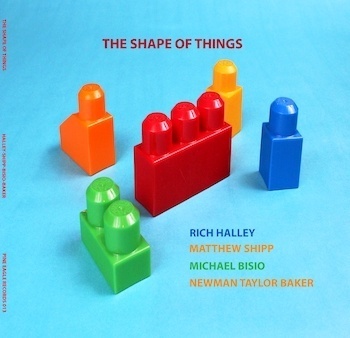
Rich Halley, The Shape of Things (Pine Eagle Records)
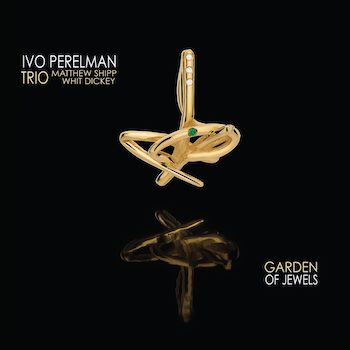
Ivo Perelman, Garden of Jewels (Tao Forms)
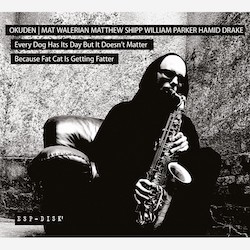
Mat Walerian, Every Dog Must Have Its Day (ESP-Disk) w/ William Parker, Hamid Drake, Matthew Shipp
What these three sessions have in common is the presence of Matthew Shipp, a (usually) avant-garde pianist whose galvanic work as a soloist and leader of a trio has recently been praised in these pages. Here he is presented in earnest conversation as a sideman in small groups led by three saxophonists, all frequent collaborators with the pianist. They all play distinctively different versions of free jazz. With adroit ease, Shipp fits the style of each leader. It’s a remarkable achievement for the pianist and for each of the groups represented here.
Inevitably, Shipp will be compared with pianist Cecil Taylor, but to my ears he is a less compulsively energetic player. His lines have a clarity, even a transparency, that’s missing in Taylor’s brilliantly obsessive playing, with its overlapping phrases and steely underlying structure. Despite the rigor of his performances, Shipp comes off to me as thoughtful, playful, even at times gentle. The first number, or shape, in Oregon saxophonist Rich Halley’s The Shape of Things is “Tetrahedron,” which begins with a hurried three-note phrase played by Halley’s forthright and engaged — but hardly harsh — tenor. On the phrase’s third iteration, just five or six seconds into the piece, Shipp responds with an equally contained answering phrase, which he then moves up into the treble as drummer Newman Taylor Baker joins in, playing largely on rims. Gradually, both musicians release themselves from the bind of this mini-theme. But the opening continues to be referred to. Shipp takes over after three minutes and, surprisingly, the band starts to swing. Subsequently, Shipp alternates heavy chords arrayed in tense patterns with more relaxed lines. Then, around six and a half minutes in, he suddenly relaxes. It’s like watching (or hearing?) someone sink into a comfortable easy chair. The piece comes to a stop and Halley reenters with a new, softly stated theme.
“Tetrahedron” offers plenty of variety: it’s rather a pleasing adventure whose different facets are revealed in due time. Here, and on numbers like “Vector,” one admires the subtle intelligence of the interaction, as well as the vivid energy of the playing, with its implied, and sometimes explicit, swing. I am guessing that the scientific titles refer to Halley’s other career: he has an M.S. he earned at the University of New Mexico while studying rattlesnakes. He must have taken a class in geometry somewhere along the line. Halley is a versatile saxophonist with a pleasingly husky tone on tenor — more Hank Mobley than John Coltrane. The title of his album suggests it might be a look back at Ornette Coleman’s famous The Shape of Things to Come, yet all four members of the quartet, with bassist Michael Bisio, sound happily present in the moment. These shapes have very much arrived. Bisio and drummer Baker solo on the most explosive number of the session, “The Curved Horizon,” whose title might refer to the long views of the natural world that are available in Oregon or to what is called the curved universe theory. Either way, there’s lots to admire here, from the wit of Halley’s titles, such as “Spaces Within” and “Oblique Angles,” to his warm, immediate sound and responsiveness.
Brazilian tenor saxophonist Ivo Perelman and Shipp have a substantial history performing together. Among their many projects over the last decade are the multidisc duo sets Oneness and Efflorescence. (Perelman also made a duet record with Whit Dickey, the drummer featured here in this bassless trio.) Perelman is the Maynard Ferguson of the tenor saxophone; he can effectively play in that altissimo range. There are notes available to him that wouldn’t occur to another saxophonist, and this extended sonic territory affects his presentation, which is rarely ramrod straight. The title cut of Garden of Jewels opens with Shipp playing a soothing series of chords. Then Perelman enters as breathily as Ben Webster playing a ballad. He seems to be musing: his initial upward-thrusting phrase sounds dramatic, but it is followed by a tumbling subsidence. I hesitate to call what Shipp and Perelman do together a dialogue. It is more like they are tripping down the same yellow brick trail. They are performing in parallel with the utmost sensitivity. Almost three minutes into “Tourmaline,” after a restless opening, the two emit simultaneous staccato notes, at different pitches. They are improvising, but they are so well attuned to each other that the interplay comes off as an example of miraculous conjunction. I should also credit drummer Dickey for his myriad colors and willingness to let the two melodic instruments suggest his moves. “Onyx” begins as a kind of hushed duet between Shipp and Dickey, with Perelman sitting out. Shipp plays a phrase, stops, and waits for Dickey’s spare commentary. Then the pianist goes on. When Perelman enters, it is in the altissimo range. I am not sure what meaning Perelman attaches to the gems commemorated in his song titles: to me the music shines like gold.
Mat Walerian, who plays clarinets and flute as well as tenor, proclaims himself to be a mostly self-taught instrumentalist — though he admits he has studied with Shipp, with whom he collaborates. Besides having the longest album title I can remember, his two-disc set Every Dog Has Its Day But It Doesn’t Matter Because Fat Cat Is Getting Fatter is notable because of its superstar lineup, with the always estimable William Parker on bass, Shipp on piano, and Hamid Drake on percussion. They call themselves the Okuden Quartet.
The recording begins peaceably enough with “The Forest Council.” This forest is eerily quiet for most of the time. Walerian’s horns are a haunting presence — they seem to be calling from some tucked-away space (behind a tree?). The tune begins, though, with Parker’s powerful solo: he’s a wonder throughout, serving up an apposite forcefulness. Walerian (on bass clarinet) and Shipp enter after a minute and a half with the pianist contributing out-o- tempo chords and Walerian huskily sounding off in the background. Although Walerian is the titular leader, this group seems to be more of a cooperative. Despite the waggishness of its theme, “Thelonious Forever” does not openly reflect Monk’s music: it is a series of duets between Shipp and Walerian and later an encounter between Shipp and Parker. The latter is aptly at the heart of “Business with William.” The two-disc set ends with “Lesson 11,” whose silences are as impressive as the subdued notes Parker and Shipp emit at the beginning of the tune. Every Dog is full of riches: it also proffers a wonderful way to demonstrate to doubters that free jazz isn’t all sound and fury.
Michael Ullman studied classical clarinet and was educated at Harvard, the University of Chicago, and the U. of Michigan, from which he received a PhD in English. The author or co-author of two books on jazz, he has written on jazz and classical music for the Atlantic Monthly, New Republic, High Fidelity, Stereophile, Boston Phoenix, Boston Globe, and other venues. His articles on Dickens, Joyce, Kipling, and others have appeared in academic journals. For over 20 years, he has written a bi-monthly jazz column for Fanfare Magazine, for which he also reviews classical music. At Tufts University, he teaches mostly modernist writers in the English Department and jazz and blues history in the Music Department. He plays piano badly.

 What these three sessions have in common is the presence of Matthew Shipp, a (usually) avant-garde pianist whose galvanic work as a soloist and leader of a trio has recently been praised in
 Brazilian tenor saxophonist Ivo Perelman and Shipp have a substantial history performing together. Among their many projects over the last decade are the multidisc duo sets Oneness and Efflorescence. (Perelman also made a duet record with Whit Dickey, the drummer featured here in this bassless trio.) Perelman is the Maynard Ferguson of the tenor saxophone; he can effectively play in that altissimo range. There are notes available to him that wouldn’t occur to another saxophonist, and this extended sonic territory affects his presentation, which is rarely ramrod straight. The title cut of Garden of Jewels opens with Shipp playing a soothing series of chords. Then Perelman enters as breathily as Ben Webster playing a ballad. He seems to be musing: his initial upward-thrusting phrase sounds dramatic, but it is followed by a tumbling subsidence. I hesitate to call what Shipp and Perelman do together a dialogue. It is more like they are tripping down the same yellow brick trail. They are performing in parallel with the utmost sensitivity. Almost three minutes into “Tourmaline,” after a restless opening, the two emit simultaneous staccato notes, at different pitches. They are improvising, but they are so well attuned to each other that the interplay comes off as an example of miraculous conjunction. I should also credit drummer Dickey for his myriad colors and willingness to let the two melodic instruments suggest his moves. “Onyx” begins as a kind of hushed duet between Shipp and Dickey, with Perelman sitting out. Shipp plays a phrase, stops, and waits for Dickey’s spare commentary. Then the pianist goes on. When Perelman enters, it is in the altissimo range. I am not sure what meaning Perelman attaches to the gems commemorated in his song titles: to me the music shines like gold.
 Mat Walerian, who plays clarinets and flute as well as tenor, proclaims himself to be a mostly self-taught instrumentalist — though he admits he has studied with Shipp, with whom he collaborates. Besides having the longest album title I can remember, his two-disc set Every Dog Has Its Day But It Doesn’t Matter Because Fat Cat Is Getting Fatter is notable because of its superstar lineup, with the always estimable William Parker on bass, Shipp on piano, and Hamid Drake on percussion. They call themselves the Okuden Quartet.


